Are Radar Detectors Illegal in Virginia and D.C.?
Yes, radar detectors are generally illegal in Virginia vehicles on public highways and are prohibited in automobiles in Washington, D.C. Virginia has a narrow storage exception that requires both no power source and no ready access.
On this page (10 sections)
- Are radar detectors illegal in Virginia?
- Are radar detectors illegal in Washington, D.C.?
- What should you do before driving through Virginia or D.C.?
- Does a radar detector law also apply to radar jammers?
- Which detector makes sense for routes where use is legal?
- How should you set up and care for a detector?
- What mistakes should buyers avoid?
- Can you use a radar detector in a commercial vehicle?
- Are radar detectors legal in other states?
- What should you choose for a Virginia trip?
Yes, radar detectors are generally illegal in Virginia vehicles on public highways, and Washington, D.C. prohibits their use or possession in automobiles. For trips confined to these places, leave the detector at home.
Virginia's narrow storage exception matters if you're carrying a detector for another part of your route. Before choosing equipment, decide where you can legally use it and how you'll handle restricted stretches.
Are radar detectors illegal in Virginia?
Yes, Virginia generally bans radar detectors in vehicles on its highways. Its law also covers devices that interfere with police speed measurements.
Virginia Code § 46.2-1079 provides a storage exception when the detector has no power source and is not readily accessible to the driver or any passenger. Both conditions must be met.
An arresting officer may take a detector needed as evidence, with return required when it is no longer needed. The statute does not authorize permanent forfeiture.
Are radar detectors illegal in Virginia when turned off?
Switching the detector off alone does not satisfy the storage exception. A disconnected device within reach still leaves the accessibility condition unresolved.
Do not treat a glove compartment or center console as an automatic solution. If you intend to rely on the exception, check how both conditions apply to your vehicle before departure.
Are radar detectors illegal in Washington, D.C.?
Yes, D.C. prohibits using or possessing a radar detector in an automobile. Turning it off does not remove the possession issue.
The District's rule covers devices used to detect or counteract police radar. The District of Columbia Court of Appeals discusses that prohibition in [Smith v.
District of Columbia](https://law.justia.com/cases/district-of-columbia/court-of-appeals/1981/80-300-3.html).
Treat D.C. as a separate route check. Virginia's storage exception does not give you permission to carry a detector in an automobile in the District.
A route that only passes through still needs planning. Arrange to leave the device outside D.C. before entering, rather than assuming a short visit changes the rule.
What should you do before driving through Virginia or D.C.?
Choose your removal or transport plan before you leave. Border crossings are a poor time to search for a storage spot or untangle a power cord.
- Check every jurisdiction on your route, including return trips and planned detours.
- Decide whether you need the detector for any legal portion of the journey.
- Leave it at home if you have no clear need for it.
- If transporting it through Virginia, resolve both storage conditions before departure.
- If entering D.C., arrange to leave it elsewhere first.
Remove the unit and pack its cord and mount while parked. Taking down accessories is a packing step, not a substitute for dealing with the detector itself.
A windshield-mounted unit can be easy to overlook during a rushed departure. Add it to the same checklist as your route, charging cables, and travel documents.
Does a radar detector law also apply to radar jammers?
Some laws cover both devices, but they do different jobs. A detector receives signals; a radar jammer transmits interference intended to disrupt radar operation.
Federal law prohibits operating, marketing, or selling equipment that jams authorized radio communications, including police radar. The government's guidance on signal jamming explains the restriction.
Do not buy a jammer as a workaround for detector restrictions. A detector's laser-detection feature also does not mean it blocks laser equipment or guarantees advance warning.
Which detector makes sense for routes where use is legal?
Choose by your regular driving pattern, not by features you cannot legally use at home. If your driving stays in Virginia or D.C., none of these detectors solves your local travel needs.
For legal routes elsewhere, the main choice here is between saved-location alerts, connected community reports, and adjustable detector alerts. These features address different needs, so start with the one that matters on your usual drive.
Uniden R3: for repeat routes and saved locations
The Uniden R3 suits drivers who pass the same stores and roadside locations each week. Its built-in GPS mute memory can remember recurring false-alert locations, such as automatic doors along a commute.
It also provides red-light and speed-camera alerts, free database and firmware updates, a multicolor OLED display, and programmable voice alerts. User marks let you save locations you want the detector to announce on approach.
Choose it if reducing repeated interruptions on familiar roads is your priority. Skip it if your main goal is the Drive Smarter community connection offered by the RAD 490i.
Review saved locations with care. A familiar nuisance alert is not a reason to dismiss every future signal nearby.
Cobra RAD 490i: for connected travel
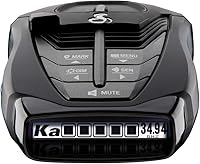
The Cobra RAD 490i suits drivers who want community reports alongside detector alerts. It connects to Drive Smarter and supports Apple CarPlay and Android Auto for viewing routes and interacting with alerts on a vehicle display.
Cobra includes adjustable sensitivity and filtering, front and rear laser detection, and firmware updates. Its IVT filter is designed to reduce false alerts from vehicle systems such as blind-spot monitoring.
The included USB-C cord, cigarette-lighter adapter, and adhesive mount provide a starting setup. The mount has a detachable bracket and adjustable angle, useful when you need to remove the unit between journeys.
Choose it if you'll actually use the connected features. Skip it if you prefer to keep phone apps out of your driving routine, and remember that community reports can miss events or arrive late.
Cobra RAD 390: for a simpler alert routine
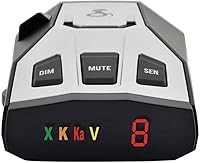
The Cobra RAD 390 suits drivers who want adjustable detector alerts without choosing around a community app. Its controls let you change sensitivity and filtering to match your route.
It includes front and rear laser detection, firmware updates, and an updateable IVT filter intended to reduce alerts from vehicle avoidance systems. A USB-C cord, cigarette-lighter adapter, and adhesive mount with a detachable bracket are included.
Choose it if your priority is a straightforward setup with control over notifications. Pick the R3 instead if saved false-alert locations are central to your commute, or the RAD 490i if shared reports are your main reason to buy.
How should you set up and care for a detector?
Set up the detector while parked, and keep its view clear without blocking yours. Read the model's instructions before choosing a mount position or changing alert settings.
Check that the bracket holds the unit securely and that the cord cannot interfere with steering, pedals, or other controls. Our guide to where to mount a radar detector explains placement choices for legal use.
Start with the recommended settings and change one control at a time. Turning sensitivity down until the device stays quiet can remove alerts you wanted to receive.
Keep firmware current and refresh any camera database your model uses. Updates and saved locations serve different purposes, so check both rather than assuming one update handles everything.
Clean the mount area as directed, inspect the bracket for looseness, and protect the unit from drops during removal. Store loose accessories together so missing cables do not delay your next departure.
What mistakes should buyers avoid?
The biggest mistake is buying a detector before checking where you'll use it. A feature-rich unit has little value if most of your route prohibits it.
Do not read front and rear laser detection as a promise of enough time to react. Receiving a laser signal and receiving useful advance warning are different things.
Avoid choosing solely by a long-range claim. Your tolerance for nuisance alerts, willingness to maintain settings, and need for connected reports matter every day.
Do not adjust menus or respond to app reports while moving. Configure the device before departure, and stop somewhere safe if you need to make changes.
For a broader feature checklist, use our guide to how to choose a radar detector. If you still need to decide whether the equipment fits your driving, read are radar detectors worth it?.
Can you use a radar detector in a commercial vehicle?
Do not assume a commercial vehicle is exempt. Virginia has no general work-vehicle exemption, and federal restrictions apply to covered commercial motor vehicles.
Under 49 CFR § 392.71, a driver may not use a detector in a covered commercial motor vehicle or operate one equipped with or containing a detector.
The federal rule has a narrow transport exception for detectors carried as part of a shipment. That differs from keeping a personal detector in a work truck.
Ask your employer or a qualified attorney which rules cover your vehicle and route. Driving for work does not itself create permission to carry one.
Are radar detectors legal in other states?
Many states generally allow detectors in private passenger vehicles, but vehicle and mounting rules still matter. Check each jurisdiction rather than relying on the rules at home.
Our guide to whether radar detectors are legal explains the wider picture. The laws and safe-use guide covers related equipment and travel questions.
If you use a phone app for traffic information, compare radar detectors versus Waze. Plan app use while parked, and keep speed choices separate from whether any device gives an alert.
What should you choose for a Virginia trip?
If you're asking whether radar detectors are illegal in Virginia because you drive there daily, leave one off your local equipment list. For D.C. travel, arrange to leave the detector outside the District before entering.
For routes where use is legal, choose the R3 for recurring routes and saved locations, the RAD 490i for connected community reports, or the RAD 390 for adjustable alerts without making connectivity the focus.
Before buying, map the whole journey and decide how you'll handle restricted sections. Start that route check with are radar detectors legal?.
Frequently asked questions
Are radar detectors illegal in Virginia?
Yes, Virginia generally bans radar detectors in vehicles on public highways. Its storage exception requires the device to have no power source and not be readily accessible to the driver or any passenger; switching it off alone does not satisfy both conditions, so plan transport before departure.
Can police take a radar detector in Virginia?
Yes, an arresting officer may take a detector needed as evidence. Virginia's statute requires its return when it is no longer needed and does not authorize permanent forfeiture; unclaimed devices may eventually be destroyed under a court order, so follow any instructions provided for retrieving your device.
Are radar detectors legal in Washington, D.C.?
No, Washington, D.C. prohibits using or possessing a radar detector in an automobile. Turning it off does not remove the possession issue, and Virginia's storage exception does not carry over into the District; leave it at home or arrange to leave it elsewhere before entering D.C.
Are radar jammers legal in Virginia?
No, Virginia's prohibition also covers devices that interfere with police speed-measuring equipment. Federal law separately prohibits operating equipment that jams authorized radio communications, including police radar; a radar jammer is therefore not a lawful workaround for a detector ban, and laser detection does not mean a detector can block laser equipment.