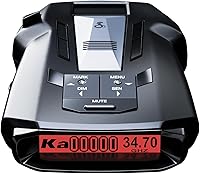
Can a Radar Detector Pick Up Laser (Lidar)?
Some radar detectors detect lidar through a separate laser sensor, but advance warning isn't reliable. A narrow lidar beam can measure your speed before the detector alerts.
On this page (8 sections)
- Do radar detectors detect lidar?
- Why can a lidar alert come too late?
- Which detector fits your daily driving?
- What should you check before buying?
- How should you mount and care for a laser-capable detector?
- Does a laser alert mean the detector stopped a lidar reading?
- Which mistakes make lidar alerts less useful?
- What should you choose if you want lidar alerts?
Some radar detectors detect lidar, but advance warning isn't reliable. Their laser sensors must receive light from a narrow beam that may already be measuring your speed.
Buy a combined radar and laser detector for awareness of both signal types, with most of your buying decision based on everyday radar use. GPS filtering, clear alerts, and a suitable mount matter more than a promise of laser protection.
Do radar detectors detect lidar?
Yes, models with explicit laser detection support can detect lidar. Radar detection alone doesn't provide that ability because radar and lidar use different signals.
A combined unit has sensing functions for radio waves and laser light. Check for both rather than assuming that support for X, K, or Ka radar bands includes lidar.
For the wider picture, read how radar detectors work. Understanding the signal types helps explain why useful radar warning doesn't guarantee useful laser warning.
How do radar detectors detect lidar differently from radar?
Radar detectors detect lidar by sensing pulsed infrared light, while their radar receivers monitor radio frequencies. A laser sensor needs enough light to reach it before it can trigger an alert.
Radar signals can spread across a wider area, creating opportunities to detect transmissions ahead. Lidar concentrates light on a specific vehicle, often toward its front plate or headlights.
That beam may reach the vehicle without reaching a detector behind the windshield. A silent detector therefore doesn't prove that no lidar measurement occurred.
Why can a lidar alert come too late?
A lidar alert can sound after your speed has been measured because the detector may receive light from the same beam used for that measurement. Detecting the signal doesn't establish that you received advance notice.
Timing depends on the beam's aim, distance, obstructions, and whether enough light reaches the sensor. There is no dependable warning interval you can plan around.
Keep a safe following distance and avoid sudden braking in response to an alert. The useful response is to remain aware of traffic and maintain a lawful, steady speed.
Can scattered laser light give you advance warning?
Scattered laser light can sometimes trigger an alert before your vehicle is targeted, but don't depend on it. Another vehicle receiving a lidar beam doesn't ensure that enough light will reach your detector.
This also explains why radar range claims aren't a sound way to compare lidar warning. A stronger radar receiver doesn't widen a laser beam or move the laser sensor closer to its target.
Which detector fits your daily driving?
Choose among these detectors by how you want alerts managed, since all 3 include radar and laser detection. None changes the basic limits of receiving a narrow lidar beam.
Start with your usual routes and tolerance for setup. A familiar commute favors location-based false-alert controls, while connected features suit drivers willing to manage a phone connection.
Uniden R3: for familiar routes and voice alerts
The Uniden R3 suits drivers who want GPS mute memory and spoken warnings without making shared community alerts the reason for buying. Its location memory helps manage recurring false signals, such as automatic doors along a regular commute.
Voice alerts are programmable, so you can set how the unit communicates before leaving home. The multicolor OLED display gives you another way to read alerts when it is safe to glance.
The R3 also includes preloaded red light and speed camera locations, with free database and firmware updates. Those location alerts are separate from detecting a live radar or lidar signal.
Choose it if repeat-route noise and clear spoken alerts are your priorities. Skip it if directional arrows are central to your buying decision; the Escort below is the option here built around that feature.
Cobra RAD 700i: for connected commuters
The Cobra RAD 700i suits drivers who want automatic location learning and community alerts. Its GPS-based AutoLearn reduces recurring false alerts as it learns familiar routes over time.
Built-in Bluetooth connects it to Drive Smarter for shared alerts from other drivers. Apple CarPlay and Android Auto compatibility lets you view routes and interact with alerts on a compatible vehicle display.
Choose the Cobra if that connected workflow fits how you already travel. Set up the connection while parked, and treat shared reports as added context because a reported event may have moved or ended.
Skip it if you won't use a connected phone and are choosing it mainly for community warnings. The detector still has its own detection functions, but unused connected features shouldn't decide your purchase.
Escort MAX 360 MKII: for drivers who want directional context
The Escort MAX 360 MKII suits drivers who want directional arrows alongside radar and laser alerts. Its dual antennas and arrows add context about the direction of detected threats, which can help you interpret an alert.
GPS-based AutoLearn handles recurring false-alert locations. Escort also includes filtering designed to reduce radar noise from collision avoidance and blind spot monitoring systems.
Choose it when direction information is a clear priority in everyday radar use. Don't assume the arrows will locate every lidar source or give extra time before a laser speed measurement.
Skip it if you mainly want a simple spoken alert and won't use the added direction information. For more choices with different feature combinations, compare our best radar and laser detectors.
What should you check before buying?
Confirm laser support, alert controls, and mounting fit before comparing extra features. A detector should work with your windshield layout and give warnings you can understand without handling it while driving.
Think about where false alerts occur on your routes. GPS location memory addresses recurring locations, while signal filtering addresses unwanted signals; neither turns a detector into a lidar shield.
Decide whether you want phone-based shared alerts enough to maintain that connection. Community reports and camera databases provide location information, while the detector's sensors respond to signals they receive.
Use our radar detector buying tips to work through broader choices. Avoid paying for features you expect to leave off.
How should you mount and care for a laser-capable detector?
Follow the manufacturer's instructions and give the sensors a clear view through the windshield. A convenient position is only useful if it also meets the detector's mounting requirements and keeps your road view clear.
Check for wipers, tint bands, stickers, and other objects in front of the sensor. Some windshield coatings can affect signals, so consult the vehicle and detector instructions if the glass has a special treatment.
There isn't one mounting height that guarantees lidar warning. Read where to mount a radar detector before settling on a position.
Secure the mount and route the power cord away from controls and airbags. Set volume, display brightness, and alert preferences while parked so you don't need to adjust menus in traffic.
Keep the sensor window clean using the manufacturer's care directions, and inspect the mount when you clean the windshield. A shifted unit or an object placed in front of it can change its view.
Check for firmware and database updates where supported, following the instructions for your exact model. Our guide to radar detector firmware updates explains the process, though files and steps vary by device.
Does a laser alert mean the detector stopped a lidar reading?
No, a laser alert means the detector sensed laser light, not that it blocked a measurement. Detection and interference are separate functions.
Cobra and Escort describe the RAD 700i and MAX 360 MKII as detection-only devices. The R3's laser detection feature is also no reason to assume it can disrupt a lidar reading.
Check the rules for your location and vehicle type before use. Our guide to where radar detectors are legal provides a starting point for that check.
Which mistakes make lidar alerts less useful?
The biggest mistake is expecting a laser alert to provide time to react. Buy for awareness, and don't build a driving strategy around receiving a warning first.
Another mistake is treating every alert feature as a live sensor reading. A stored camera location or shared community report doesn't mean the detector has received a lidar beam.
Avoid disabling alerts or creating location mutes simply because a warning is annoying. Learn what each control does, and don't assume every signal near a familiar location has the same source.
Finally, don't choose solely on the strongest range claim. Compare radar behavior, false-alert controls, and daily usability in our best radar detectors for cars guide.
What should you choose if you want lidar alerts?
Choose the Uniden R3 for voice alerts and familiar-route memory, the Cobra RAD 700i for a connected commute, or the Escort MAX 360 MKII when directional context matters most. Skip all 3 if your sole goal is guaranteed advance warning of lidar.
Do radar detectors detect lidar? Some do, but the buying decision should turn on features you'll use throughout the drive, with laser detection as an added source of information.
Use our radar and laser detector comparison to narrow your options, then confirm mounting fit and alert controls before ordering.
Frequently asked questions
Do radar detectors detect lidar?
Some radar detectors detect lidar through a separate laser sensor, but radar band support alone doesn't establish that capability. The sensor must receive enough laser light to trigger an alert, and a narrow beam can measure your speed without reaching a detector mounted behind the windshield.
Is lidar the same as radar?
No, radar uses radio waves, while lidar uses pulses of infrared light to measure changes in distance and calculate speed. A combined detector needs separate sensing functions for these signals; radar range claims don't establish how much warning its laser sensor will give during a lidar check.
Can a radar detector prevent a lidar ticket?
A radar detector can't guarantee advance warning or prevent a lidar speed measurement; its laser alert can sound after your speed has already been measured, and it doesn't block the beam. Follow posted limits and check detector rules for the places and vehicle types involved in your trip.
Does mounting position affect lidar detection?
Yes, mounting position affects the laser sensor's view through the windshield; obstructions, windshield treatments, and the beam's aim can affect whether light reaches it. Follow the manufacturer's mounting instructions and keep the sensor clear, but don't expect a different mounting position to guarantee warning before a speed measurement.